


Trees edged in from both sides and the highway seemed to narrow as Cedric continued on I-84. Newburgh had become the goal almost as if he’d thrown a dart at the wall. Weeks ago, in preparation for his journey, he’d poured through the atlases at the library. Though they’d been hopelessly out-of-date, the reference materials had served him well. The town of Newburgh would be right off the highway with easy access to cross the Hudson and approach New York City from the north. And if it didn’t work out, he could always pick up his bags and go somewhere else.
Soon after passing the airport, a roadcut rose on his right, exposing dark grey stone. A careful glance revealed much of the façade had been secured by a chain sheet.
Without fanfare, in the shade of the rocky cliff, he passed underneath the sign he’d been anticipating for months. Cedric followed the arrow, reduced his speed, and took exit 10 for the last city before the toll.

There was not much time to downshift, and he managed to make it to second gear only to have the stick resist settling into first. His eyes came off the road for a moment, and he tried again, this time successfully, and he then fully engaged the brake. With a red light in front of him, Cedric looked around, overpass on his left, and flipped up his turn signal.
As he turned right and entered the town, he was immediately struck by the impressive view of the open sky. The horizon had just begun to fade into pale yellow, foretelling the end of another day. A few trees decorated the periphery of the scene, but most had long ago been felled to make way for the roomy intersection. Black powerlines were suspended over his head, hung on the dead wood corpses.
A grim gas station idled on the left and several morose dwellings dotted the view ahead of him.
His heart thumped anxiously in his chest.
‘Is this it?’
If this were Newburgh, it felt disgustingly familiar. The destination had become so bright in his hopes he hadn’t even prepared for the tarnished reality of what lay beyond. He had yearned so tensely for escape that he hadn’t bothered to make plans for purgatory.
A sign indicated the direction of the library, town center, and an institution of higher learning. In his despair, he tried to focus the aimless fear suffocating his heart. His palms were sweaty upon the steering wheel, so he stretched his fingers and moved his right hand to rest on the gearshift. He waited for the light to turn and then made a wide left.
Mid-sized homes lined the road on either side. Sitting so close to the main road, they hardly possessed a royal easement, but there was still a vast moat between. And maybe, even after this journey, he wasn’t any closer to the drawbridge than he had been.
Driving the car had been the easy part — he’d dragged all his junk along with him.
Now again headed east, he could see the hills that rose over the other side of the river, though the water itself was obscured. As he drove, several streets cut off on the left side, bound for more of suburbia.
He continued, and a brick road appeared off to the right, curving around a central hill.
The road wasn’t yellow at all; this dark red brick was a stark contrast to the grey and black he’d been traveling on for the duration of his journey. He looked to either side. There was no visible signage posted, leaving the street’s name a mystery, but he persisted, thinking maybe this would approach the center of the old city. He remembered the arrows he’d seen in white, and hoped they’d keep their promise.
He proceeded forward. The brick had been redone in places, patched with asphalt, and the uneven edges sent shockwaves through the car.
The patchwork street formed a distinct boundary between two worlds. On the left, squat, modest houses fell into the descent toward the river. The grass was overgrown and speckled with dandelions in a variety of life-states. The right, on the other hand, looked down upon the others unconcerned, their own yards pristine, stone walls carefully mortared into place. Perhaps this was the property of the college the signs had told him to expect.
There was not a single person on the street, student or otherwise. It gave the whole place a deserted, eerie affect. Cedric supposed that classes were out for the summer, and yet, the image seemed incomplete.
He looked left again, and the buildings on the river side started to morph and grow as he progressed down the street. They were increasingly level with the terrain, aging into weathered multi-family homes, some hiding broken glass behind plywood. They had trim porches that might have in their prime shielded a wicker rocking chair from the rain, but today they sat empty, paint peeling to reveal discolored wood.
He turned his head again. The college to the right looked pretty enough, what little he could see from the road: a manicured knoll flanked with mature trees. Tame shrubbery grew here and there, making the whole thing rather picturesque. He had no doubt thousands of young people thought of this place as their home away from home.
Certainly Diana and her family had painted these places as something from a fairy tale. It would be utopia for someone like him, they’d promised: books as far as the eye could see, professors who would understand his plight, students who’d be his companions for the rest of his days. The time he would spend there would enrich him and change him into the man he was always meant to be.
Cedric had thought about it then, and as he drove on this brick road with the hill rising to his side, he remembered how his teachers had suggested the same idea for his future. Their eyes had been practically wet with tears as they reminisced fondly on the camaraderie and belonging they’d felt within those gates, wishing the same bliss for him.
He’d smiled and nodded and said he’d think about it.
He continued to drive down the narrow street. Where the college grounds ended, the right side of the street started to look more similar to the left. Five, six, seven steps made impressive entrances to tired brick townhomes, some painted, some left bare. Most were rather plain, but others had detailed ornamentation around the roof and windows, revealing their ancestry. Life here had once been quite different, he gleaned, before these windows had been boarded up.
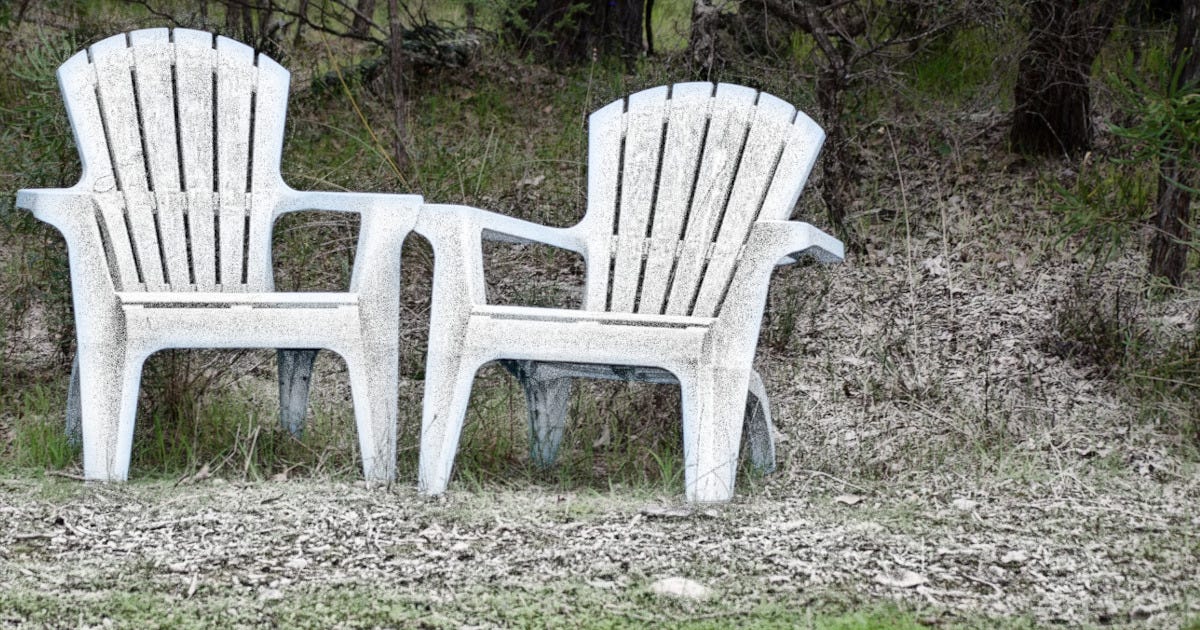
Every so often there were clusters of plastic chairs quiet outside the homes. Children’s toys forgotten in the sun were ill-differentiated from the smattering of garbage that littered the grass in spots. Now a ways from the college, the street had taken on somber, neglected tone. He looked down for a moment at his faulty radio, then back to the road, where he progressed at a glacial pace. He glanced at his rearview mirror and found it empty.

‘Where the fuck am I going?’ He thought in doubt.
Feeling suddenly discouraged and frustrated, he peeled over to the right without even bothering to engage his signal. He quickly parked the car and turned it off, leaving the key in the ignition. The engine rumbled for a second and then fluttered into silence.
Cedric let out a sigh and flung his head backward against the seat.
‘What am I even doing here?’ He asked himself, overcome with desperation. ‘Am I going to sleep in the backseat?’
He sat there for a moment, eyes closed, listening to the scant intermittent noise from outside his car — little more than a lonely songbird.
‘Where are all the kids?’ He wondered idly. ‘Watching TV?’
He’d traveled hundreds of miles to wind up in another sad little city by the river. Only this one was called something different.
He opened his eyes and brought his chin back on the level. There was no point in getting waterlogged — He refused to turn back.
He looked to the right. Mismatched townhomes sharing walls made a strange garrison. Small businesses, or at least, what appeared as such, were barricaded with steel rolling grilles. Others had chosen to bar their windows.
First looking down, and then into his Cavalier, his eyes then traveled to the left and out the driver’s side window, toward a black metal fence and the graveyard it contained. Several wizened trees lent shade to those that slumbered agelessly beneath. The tombstones were disordered and mismatched, fashioned into weathered shapes that hearkened back to an age now long estranged. Some of the markers had begun to lean long ago, no modern man daring to correct their orientation.
He remembered to breathe.
‘Things could always be worse.’ He tried to reassure himself.
Cedric removed the key from the ignition and left the car.

Not even bothering to look both ways, Cedric took faith in the silence and crossed the street. Here, on the river’s side of the divide, stood a bastion against the march of time. He stopped on the sidewalk and let his gaze wander.
An iron fence marked the barrier, the bars adorned with some sort of quasi-religious ornamentation —
Every so often, the fence paused and restarted, a simple chasm allowing entry for visitors. Nothing could keep the living from passing through the gateways: no locks, no keys.
A quiet breeze rustled his short, brown hair.
‘Don’t these places usually close at sundown?’ He wondered, attempting to take refuge in the rule of law. He could not help but feel he did not belong here, and still he was tempted. He wanted to gather the courage to walk amongst the stones, to feel the serenity of the stillness, but —
Cedric took notice of the sky’s hue, the core of his attention still not torn from the tranquility of the slumbering dead. The blue threatened to fade into orange, and yet, the scene was still fully illuminated by the light of the Sun.
He’d been to a funeral, once, he supposed nearing a decade ago. The memory slipped from his grasp as he tried to recall the details, but he was sure it had happened: he had been there. There must have been so many words said on that day by the strangers in dark clothes, but all he could remember fully was the fistful of dirt he’d been instructed to hurl into the occupied grave. As Cedric traveled to that place in his mind, he could still feel the grit rough against his palm. He shuddered, remembering the guilt he’d suffered long afterward, ashamed that he’d inadvertently dropped stones upon the resting place of his kin. The clatter of the rocks had echoed noisily against the walls of exposed earth, and he had long searched over that moment, transfixed by the very wrongness of what he’d done.
How long had it taken for grass to grow again over the freshly turned soil? He had no way of knowing. No wreath at Christmas, no daffodils at Easter; he was sure that the funeral had been the final farewell. He wouldn’t even know how to locate the grave except in his fragmented memories. His mother would have had to have thrown him in the car and taken him to the cemetery on some day afterward, and he was sure that had never happened. Cedric recalled one of the only things his mother had ever said of the old man after he’d died:
‘He was better grandparent to you than he ever was a father to me.’

Cedric wasn’t sure how long he’d been standing there looking into the graveyard when his thoughts were interrupted.
He could hear music — or at least, the impression of it — rapidly approaching his current position. The car frame surrounding the sound system rattled noisily, muffling what melody might have been recognizable and leaving only the rumbling of the bass to imply the presence of a song.
Irritated at the din smothering his moment of solitude, Cedric stood his ground until the car passed behind him. Turning his sight over his right shoulder, he watched as the car ignored any efforts of traffic control, making a turn without bothering to stop.
‘People think they can do whatever they want…’
But he quickly regretted allowing his anger to spike. Jealousy was a poison best not swallowed.
Even though he could no longer see the car, the soundwaves took several seconds to dissipate. Cedric’s gaze remained facing toward the noise until the air was once again still.
His tan Cavalier sat quiet, waiting patiently across the street. It, too, had been disturbed by the intrusion, but refused to frown. The vehicle had made few complaints despite the demands that he had forced it to bear.
Cedric looked up past the roof of his car and noticed a plain sign hanging in the window of one of the townhomes on the other side of the street.
ROOM FOR RENT
INQUIRE WITHIN
Cedric looked up at the townhome. The brick was so faded the uninitiated might have said it ceased to be red. Next to the door, three windows jutted out from the façade, forming a bay window to allow light to filter into the house. Ivory curtains hung gossamer inside the glass and a craftsman’s sticker had been left forgotten in the corner of the pane.
He propelled himself up the steps, five or so, and rose until he was level with the front entrance, a double door in dark wood.
He knocked — and waited.
In his uncertainty, he looked again at the sign in the window. Although it was now set at an oblique angle, it confirmed what he had been promised. He only hoped someone else hadn’t arrived first.
The distinct scraping of metal on metal echoed through the door, and from the center, it opened.
Cedric looked toward the door but his attention was immediately drawn downward as a dark shadow rushed from the chasm, sweeping dangerously close to his ankle, down the steps, and then sharp to the left.
“Nichelle…!” The woman at the door called after the cat.
Cedric looked away from the bolt of fur, up and toward the voice. The one to whom it belonged bore a weathered face, wrinkles creasing her forehead and the corners of her mouth. The mass of soft curls atop her head suggested a woman who had escaped the frenetic insecurity of youth, but was hardly ancient. She was sturdy, well-fed, and perhaps somewhat sedentary. Her eyes were slightly distorted through large, clumsy eyeglasses, the frame partially transparent and pale pink.
“Can I help you?” She might have raised an eyebrow to intensify her query, but the truth was obscured by the enormous spectacles.
Cedric tried to correct his posture, all of a sudden present for an interview. “Yeah, um—”
He spied the window in his peripheral vision, regaining his focus. “I’m here about the room.”
He felt her scrutinizing gaze wash over his scruffy face and threadbare clothing.
“That is—” he tried to negotiate, “If it’s still available.”
She looked at him with intensity, leaving several seconds of quiet air between them. Then, her mouth twitched to signal the end of her preliminary consideration and she stepped back from the entrance.
“Come on in.”

The house had the overwhelming scent of dinner, but it wasn’t at all unpleasant. The smell of roasting meat dominated the profile, but he also noticed bright accents of herbs and spices. He realized, his stomach reacting to the aroma without his consent, that he needed food.
“Take your sneakers off in the house, if you would. Carpets don’t clean themselves.”
Cedric noticed she already wore a pair of light brown slippers. He obliged and removed his old tennis shoes, leaving them next to a pile of assorted footwear in the hallway. All of them, some three or four pair, were in women’s styles.
He was still in the foyer when she spoke from the first room off the entrance to the right.
“So, what’s your name? What brings you to Newburgh?”
He poked his head in the doorway, finding a small but tidy room somewhat out of time. In the amber glow of incandescent bulbs, the modern essentials were all present; a large television, a modern stereo system — but so too were several wing-back chairs, a record player next to a heavy shelf, and a polished curio cabinet filled with knick-knacks.
“I’m—”
He felt a little sheepish, the past year’s events all flooding back to him.
“I’m Cedric.” He tried to pick his words carefully. “I’m looking for a new job for the summer.”
Her face flashed in skepticism.
“In Newburgh? Who told you to come here?”
Cedric felt shame rising to his face.
“No one, uh — told me to come here. I —”
He struggled to maintain eye contact.
“I found it on a map.”
She laughed a little. “I don’t know what map you were using, but Newburgh isn’t exactly the best place to find work. You’re a couple decades too late.”
Cedric didn’t say anything.
“Are you a college student? Are you hoping to make your way into the city?”
He opened his mouth but fumbled for words.
“You know what,” she retreated. “It really doesn’t matter.”
She moved to the other side of the room and sat down at an antique desk. She pulled a sheaf of paper from a drawer and began to speak while shuffling through the packet.
“Listen, room’s eighty a week. Cash. Today’s Tuesday, so rent will be due up front every Tuesday.”
She took out a pen and began to scrawl on the paper.
“Not too many rules, but what’s there I expect you to hold to. No smoking, no loud music. I don’t care if you have a drink or two but don’t get rowdy. Laundry — I’ll do your laundry if you want, or there’s a laundromat down the street. Just let me know. Keep your bed clean. No shoes in the house.”
She turned to him.
“Can I see your I.D.?”
Cedric looked at her and placed his hand on his wallet, all too cognizant how suspicious his reticence must have appeared.
“I don’t intend to keep it,” she reasoned with him, “I just want to make sure you are who you say you are.”
“Oh, uh — yeah, sure.” Cedric took the wallet from his pocket and removed his driver’s license, looking at it for a moment before handing it to her.
She set the card on the desk and began to copy numbers on an index card.
“This address any good?”
Cedric swallowed the spit pooling in his mouth. “…Any good?”
She turned back to him, adjusting her glasses. “I’m not going to send you the National Geographic or anything, I just want to know who to contact if anything happens to you. Address, phone number—”
“Oh.” Cedric uttered anxiously. “Y-yeah, that address is fine. It’s my aunt’s place. I moved there after my mom died.”
She turned back to her paperwork and wrote the address on the card.
“I suppose I never introduced myself.” She finished writing and put the pen on the tabletop. She turned back to him, still sitting, and handed the card to him.
“I’m Betty. Betty Clark. ‘Betty’ is fine.”
Cedric tried to seem normal, slipping the card into his pocket. “Nice to meet you Betty.”
Her face softened, her eyes seeming to have a little gleam behind the thick lenses. “Nice to meet you too, Cedric.”
She turned back to her papers, shuffling through them and showing him what they contained. “This is a copy of the rules and your responsibilities. Pay your rent on Tuesdays and don’t make a nuisance of yourself. But you’ll have a copy you can read over at your leisure.”
She flipped the page.
“If you’ll just give me your John Hancock here, we’ll be done with the formalities. Well, that, and the eighty dollars of course.”
Cedric looked at the sheet of paper, toward the blank space intended for his signature. Absentmindedly, he moved his hand to his wallet, moving his gaze back to Betty for a moment, and then back into the void as he opened the billfold.
“Yeah, of course.” He peered into his wallet and removed four twenty-dollar bills, each in varying degrees of degradation.
Betty took the bills and slipped them into the right side of her housecoat. She looked at him.
“You want to sit down?”
Without waiting for his response, she vacated the seat and handed him the pen, a Bic in blue.
He took the pen and sat on the plain, wooden chair. He looked at the Xerox before him, somewhat speckled from successive iterations of copying.
Cedric steadied himself, his pulse relaxing as the signature unfolded beneath the pen’s nib. He thought of Diana on the tree swing outside her house as he drew the letters.
‘Cedric…’
’…Kenyon.’
And like that, the name lay before him in ink. He looked at it a moment before Betty picked up the paper, ripped off the front sheet, and handed it to him.
“Feel free to take your stuff upstairs. Door’s unlocked right now but I’ll get you your keys. Room’s the first door on the right as you go up the stairs, across from the bathroom.”
He didn’t know what to say, but she filled the cold silence.
“D’you have dinner yet? Would you like me to fix you a plate?”
Cedric looked at Betty.
“Yeah Mrs. Clark — Betty — Thank you. That would be great.”