


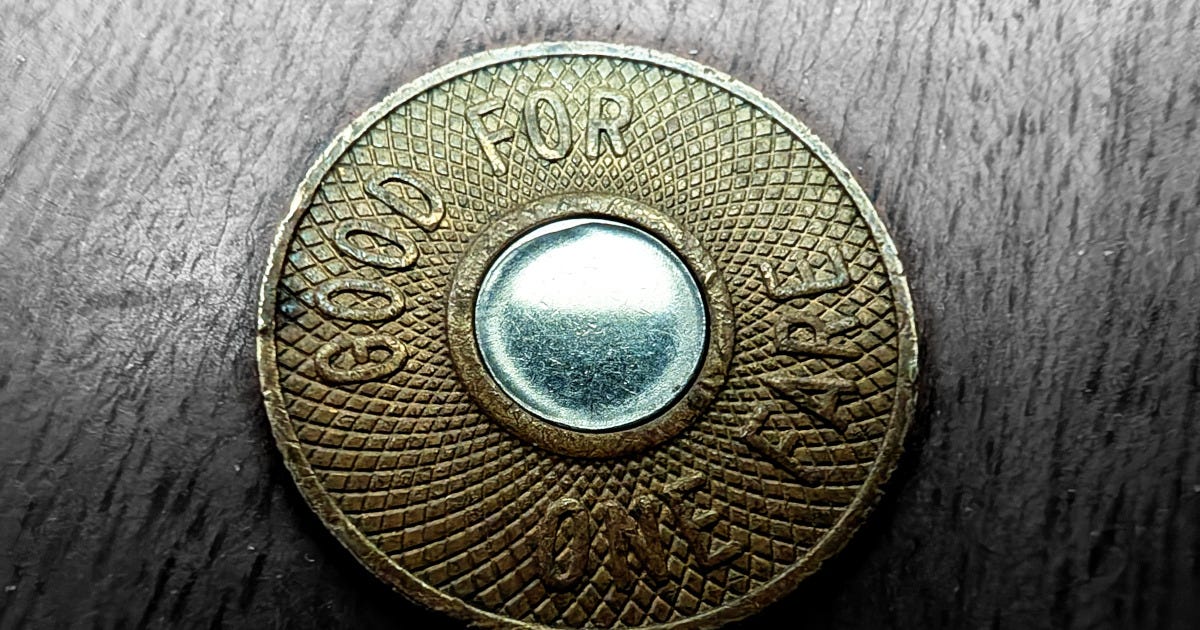
“Where’s your ticket, little lady?”
A young girl looked up from her wide-ruled notebook and lowered her number two pencil. Between massive curtains of wavy brown hair peered eyes bound in such a vibrant amber that with certain orientations of incident light, they might have seemed iridescent, otherworldly, almost — red.
In the dim ambiance of the train cabin, however, the conductor had other things on his mind.
“You need a ticket to ride, miss. Where is your mother? Did she already make her purchase?”
Friday took in a lung-ful of stale air.
“She’s in the bathroom,” she replied, and added, “I think she drank too much coffee this morning.”
The man broke into a gentle smile. “Happens to the best of us.”
Friday pressed her lips together and said nothing, letting the mustachioed attendant speak first.
“Where are you two headed?”
She had prepared for this. “Times Square. We’re seeing a show today. We went last year.”
“Very nice,” he said, distractedly. “Well, have your mother get the tickets out when she returns. I’ll come back the other way after Woodside.”
“Yes, sir. Thank you, sir.”
The train rattled over the tracks, speeding toward the city, and the conductor disappeared into the chasm dividing the cars, determined to punch the tickets he’d been hired to verify. That was his job, and he did it well. People liked him.
Friday would never see the man again. She hadn’t put any money into the ticket machine at the station. Nor was her mother lurking in the toilet. She had hoped to avoid surrendering her few bills for this purpose, and her button nose had served her well. By this time, now at the age of nine, she considered herself a skillful liar. She kept her face still, not a twitch of the mouth, and the adults would go about their business and walk on past, none the wiser.
They thought this was their world.
Through the cloudy glass, she watched a station go by, and then the next, and she descended the train at the last stop in Queens.

Several weeks prior, Friday’s life as she had known it had been irrevocably shattered. She hadn’t asked for help, she hadn’t sent away for anything in the mail — but the news had arrived just the same. And once the cat was out of the bag, there was no way in hell it was going back in.
Friday was not accustomed to being summoned by the school officials. That was something that happened to other children when they did something they weren’t supposed to have done. She did her homework, she followed directions, and she kept her thoughts and opinions to herself. In all aspects, she effortlessly embodied model behavior for a fourth grade girl; there should have been no reason the authorities would have wished her presence.
It had been a quiet day, a Thursday if she remembered correctly, and nothing much out of the ordinary had precipitated the interruption. Maybe there had been drizzle on the way to school, and perhaps she’d stepped in a puddle, but she couldn’t remember anymore. She’d been enduring her lessons, dutifully performing arithmetic, as she always would have been on any usual weekday morning. Borrow a ten, carry the one, just as they’d told her to do.
Friday found little challenge at school, feeling the experience often rather dull. Even duller, she’d thought, were her teachers, but they were veritable fonts of wisdom compared to the insipid children that filled twenty-five-some-odd squat desks in that classroom. She could not fathom them, neither their inane questions clearly answered in the lecture a minute prior, nor their tendency to bounce up and down in their seats as if driven by motor. They stumbled over their words, tripping upon their myriad meanings like roots above ground. Their minds were in the clouds, Friday concluded, and she was alone in keeping her feet firmly upon the path.
She was not like them, she had realized from a tender age, but she could pretend.
“Would Miss Friday Perkins please present herself at the principal’s office?” A crackling voice echoed over the loudspeaker, sending the girl’s heart sinking into the frigid pool of despair.
Immediately, she was ice.
What could the principal want with her? What had she done? She had made every effort to follow each rule, however irrelevant it had seemed, even if that rule had been intended for someone else —
Her mind searched her history, pouring over possible transgressions. She slipped her hand in her pocket and clasped her fingers around a tube of chapstick, praying it wasn’t the thing she feared. The guilt began to coalesce, but she skipped past.
Had she forgotten a homework assignment? No, that was too minor for this; the principal wouldn’t involve herself. Could someone have blamed her for a crime she hadn’t committed? She hoped not, but —
The children were always in league. They were a unit, all of them together, and she —
“Friday? Were you listening? You heard the announcement, didn’t you?” The teacher had placed her fingers upon the desk. Friday looked up, losing herself in the woman’s flowery blouse and pearl necklace. She closed her notebook and clutched it absently to her breast.
“Go on,” she said, encouraging the child’s obedience. “Don’t make them wait.”

Friday had been at this school for a couple of years. She had liked her old school better, but then maybe that was the rose-tinted glasses talking. She’d been at several before anything had stuck.
She hadn’t always lived on Long Island. Once, what seemed like an eternity ago, she’d lived in a little apartment above a five-and-dime in a small town in a quiet state. She could no longer remember the smell of her mother’s perfume, nor the sound of her father’s laughter, but some other things were still in bright color, the edges crisp from where she wandered often. She’d had many stuffed animals and countless strawberry candies and a wire-frame bed that made her feel like a princess. In her memory, that place was a castle and the windows stretched all the way to the ceiling and her mother and father used to keep them open and the blinds would crackle in the wind and raindrops filtered through the screen and the gusts would blow down the figures she’d left on the sill and she’d later find them bowing on the carpet —
But that was all before the accident.
Friday had stayed at a foster home for several days but she couldn’t remember much of that either. But she did remember how there were eight firm beds in two trim rooms and all the toys had to be picked up once they were done with them and they weren’t allowed to make too much noise and the big lady who lived there kept the refrigerator door locked at every hour and there was no milk and no juice and certainly no candy and one of the children had looked into her eyes and said she looked like a demon.
No one had ever said something like that to her before.
When her grandmother came to fetch her from state-ordered hospitality, all-at-once pounding impatiently upon the door, the girl had been petrified. The old woman had a crazed, haggard look, grey hair going every which way and clothes hanging off her body like robes. She seemed more like an ancient bird than a human, snapping and screeching at Friday’s temporarily appointed guardian as her scant few belongings were gathered.
It was then that she knew her mother and father were truly gone.
She’d pulled the child by the wrist, dragging her out of the foster home, ashamed she’d ever had to step foot in such a forsaken corner of society. The little thing knew to follow as fast as her legs would carry her. Friday crawled into the cream-colored leather of the passenger seat and fastened her belt, shaking the dust from her feet.
Her grandmother ranted and raved intermittently as they drove through the town. Friday didn’t know her grandmother well then, but she knew she was the mother of her father and she learned quickly that she didn’t much approve of the woman he’d married. And maybe, she said halfways, this was all her fault that he was now dead.
Something about a waste of Talent —
Her grandmother had gained a set of keys and would not leave the town until she assessed what she was leaving to the wolves. The place Friday had once known as home was empty and dark, her grandmother first pushing all the windows shut, lowering the shades, and then viciously unplugging anything that took power from the walls, all while muttering beneath her breath, words beyond comprehension. In a frenzied trance, she iterated through the house, eventually lingering several minutes in the bedroom Friday shirked from entering.
Friday stood in the kitchen, red eyes peeled back to see the fish tank on the counter in the shadowed room. Its lone denizen, adopted from a summer’s carnival, floated immobile at the water’s meniscus, a cylinder of flakes sitting just inches away on the other side of the glass.
She realized she had no choice.

“Hello Friday, how are you this morning?”
The woman who sat behind the front desk was always quite talkative when Friday delivered the attendance tallies, and yet, she never could remember the woman’s name. Friday was terrible with names and at this point, it was uncouth to admit her ignorance.
“They called me down. I’m supposed to meet the principal. Do you know what about? I’m not in trouble, am I?”
She smiled, and Friday felt even less secure. “You’re not in trouble, don’t worry your pretty little head. A woman from a very exclusive program in New York City wanted to speak to you. I believe it’s a boarding school.”
Friday frowned. “We don’t have the money for that.”
The woman stood up from her desk and stepped forward, in an attempt to usher the girl down the hallway. “Don’t put the cart before the horse; sometimes these schools have money put away for kids that need it. You never know if you don’t ask.”
As she led Friday past the soulless reproductions hung on the walls, the child was struck by how short she seemed, downright diminutive now that she was removed from her seat at the desk. She stopped at the door and bent at the waist to touch Friday on the shoulder, knocking some of her voluminous hair astray. “Why don’t you just give her a chance?”
The secretary turned the doorknob to open the principal’s office. There the bottle blonde sat, in her usual spot — or at least, what Friday supposed was her usual spot — in a high-back leather chair. The girl hardly had a chance to take in the contents of the small room before feeling as if the breath had been stolen from her throat, eyes pulled as if by magnetism toward the left-most chair of the desk’s audience.
An impossibly thin woman in a dark dress turned her body toward Friday, rising to give her greeting. Her raven hair was spattered with grey, drawn up in a severe bun atop her head. A porcelain brooch bordered with silver adorned her chest, the image in a blue now too faded to resolve. And yet, despite her wrinkled skin and antique accoutrements, the woman seemed anything but elderly; her lithe body radiating an intangible energy she could not yet place. Friday was rather dumbstruck.
“Welcome, Friday,” the principal said. “Good to see you. This is Mrs. Myrtle Marscapone, headmistress of the Marscapone Foundling Home in Astoria, Queens.”
Friday’s eyes had not moved at the principal’s words, her very droll existence seeming to dissolve like ash on the wind. She instead stared at the woman with dark almond eyes, clad in a funereal dress from head to toe, tight about her neck and adorned with a cuff of dense lace. A single dark blemish ornamented the bone framing her cheek, contrasting her pale, unpainted lips. Her gaze was piercing, and Friday felt exposed, wrapped in cellophane, and the spiral-bound notebook fell from her hand.
“Don’t be shy, Friday. Introduce yourself.”
Friday bent down to pick up what she had dropped and then did as she was told, straightening her spine and slowly extending her right hand.
“Good morning Mrs.—” she tried to grasp the unfamiliar name. “Marscapone. I’m—”
She forgot for a moment. “I’m Friday Perkins. I’m in the fourth grade here at—” The girl shook the woman’s hand, and it was warm, and she neglected to utter whatever she had intended to say.
“It’s wonderful to finally make your acquaintance, Miss Perkins. I’ve heard so much about you.” Her voice did not falter, a mahogany amongst pine.
Friday felt her face flush scarlet, and the two of them sat down.
“I hope you can excuse my intrusion on your day. I steal too much of other’s precious time; we each have far too little of it. I’ve been traveling far and wide to find students to fill what will likely be my last class of students before I hang up my hat and rest. For nearly forty years, I’ve run a small school for very special children out of my home in Queens. And I’ve reason to believe you might be one of those very special young people.”
Friday swallowed the spit pooling in her mouth.
“My students go beyond reading, writing, and arithmetic. We teach to the heart, the soul, the very lifeblood that binds our constituent parts together. The children I take in are those who lack a guiding hand in the way of the world. Those who might falter without a quality education. Those who, with their deficits addressed, their wounds mended, might someday have the power to change the world.”
Friday looked at the principal sitting idly, and then back to Myrtle.
“It’s… an orphanage.”
Myrtle’s face was placid. “In a manner of speaking, you might say so; however, the term has fallen from favor. Nor have I ever preferred its alternatives.”
She clarified. “And it’s not entirely accurate. Some of my students do very much have living family. And—”
Myrtle’s gaze took on a sudden icy affect. “I daresay even those with the most auspicious start in life—”
Friday felt a chill ripple through her nerves.
“Are orphans in one way or another.”
A momentary pause froze Friday’s mind, thawed only by the voice of the headmistress. “I prioritize recruiting those who have sufficient aptitude. Determination. Need. Every case is unique. Every child—”
Myrtle paused, and enunciated while looking at the girl, “Unique.”
Friday was unnerved. Anxious. Scared.
She’d always felt different than the other children, and her heart stirred when she remembered her parents were dead, but she still could not help but resist the strange woman.
“My g-grandmother would never go for it,” Friday stuttered, her eyes threatening tears. “We can’t afford things like that.”
But Myrtle was not about to be refused. “Money is no object. If you are able to earn admission to my school, we make sure you can attend.”
The woman’s pencil-thin lips betrayed a slight grin. “Getting in; that is the hard part.”
Friday looked away, overwhelmed, feeling more than she had become accustomed to confronting, desperate to return to the comfort of facts and figures. She rose from the chair and glanced at the principal, pleading for an accomplice.
“My grandmother — we tried so many schools before we found this one,” Friday looked at a picture on the wall, barely cognizant of its contents before drawn to look at the blotter on the surface of the desk.
Her voice was quiet, despondent. “I’ve just become comfortable here.”
Friday, staring down and away, began to feel rather dizzy. She laid the blue notebook on the desk, the corners tattered and worn. She traced the black spiral with her eyes as her vision began to blur at the edges, yearning for retreat.
She could no longer look at the strange woman, but even without her eyes, she could feel that presence pouring heat into her nerves by proximity. The dam that held back her soul was bending at the seams.
Myrtle reached a hand across the surface and slid the notebook toward herself. Between fluttering heartbeats, Friday heard the rustling of pens from the principal’s supply, the woman with a weakness for maquillage now little more than ambiance in her compliance.
“I’ll give you our address. You’re welcome to send us a letter if you ever change your mind.”

Friday’s grandmother was a bit of kook.
That was the friendliest word Friday could summon for the woman. She could have rendered many more less polite. But that was the one she chose.
Friday had thought little when the woman had gone tearing through her parents’ apartment in a frenzy, unplugging everything remotely modern, removing every source of voltage from its circuit.
Perhaps she’d had too much to think of in those days.
No, she hadn’t thought much of anything, watching the woman with the mane of whitening hair rummage through the little domicile and enact war upon the very notion of flowing electrons.
She’d simply stood there, dumb and stupid, mourning her deceased fish.
And when she got to the little house on Long Island, more east than west, she threw her suitcase on the bed and unpacked. She hadn’t known what to look for or when to sound the alarm.
She’d simply been concerned with surviving.
When her grandmother forbade her cartoons, she smiled and looked the other way, grateful to have a warm dinner each night. And when her grandmother said she couldn’t listen to the radio, she lowered her head and said okay. And when the sun sank behind the horizon and she was only permitted candlelight until the bell tolled the next hour —
She didn’t know what she was missing.
But she always suspected the old woman. Yes, she couldn’t possibly understand her prejudice, but her inner fire burned and she remembered how things had been in the days when she’d been young.
She possessed a keen eye, a — ‘God-given’ eye — and she rebelled against the limits of her cage. She picked up a stick and rattled the bark against the periphery of her limitations.
Because that was her inheritance and she didn’t know better.
Perhaps she raged in secret because her grandmother had afforded herself an exception to the rule she applied elsewhere, thinking it a secret concealed beyond reach —
And why was this a given to old granny but she, herself, had been forbidden to watch Rocky & Bullwinkle? Was the old hag so ignorant of the hypocrisy?
Friday had gone into the denizen of the old woman and she’d dared —
To touch the rabbit’s ears.

Friday left the train just as she’d planned, exiting the cabin at Woodside. That station, with its urban lack of glamor, had given her the transfer she needed.
While the adults deposited their tokens into the turnstile, the young girl, with her bushy hair, stockings and Mary Janes, leapt over the restriction. Or, rather, she bowed her head and went underneath.
She’d never been on the subway before. But, then, this one didn’t go beneath the ground. So maybe it wasn’t a subway at all.
She could read a map. She could count from one to ten. She could listen to the announcements and read the placards. Maybe that’s all she needed to get where she was going.
At Queensboro, she simply walked across the platform. And maybe, it felt, knowing more than she had learned, that she had to go backwards before she could go forward.
She got on the yellow train, the “N” if anyone asked, headed north. And she thought someone should stop her. She waited for it to happen, held her breath in anticipation, but it never did. She knew someone should ask why a nine-year-old girl was traveling by herself and where were her parents and was she lost and did she need help and did she need a quarter for the pay phone to call someone to come fetch her —
But she passed invisible.
And when she got to Ditmars, she left along with everyone else on the train. The crown of her head barely touched a man’s chin, and yet they let her proceed in mindless acceptance. They had no energy to step out of line, to deviate from their trajectory; that was not their destiny: Not today.
Friday clutched her notebook to her body more out of a need of the pressure than anything, having memorized the address in the days prior. The woman’s handwriting scrawled within seemed antiquated, needlessly formal, and yet, strangely familiar. The young girl had become haunted by that pervasive suspicion that she could have things if she would just dare to speak.
Leaving the station, she walked past a map and entered the flow of bodies disappearing into the streets. She’d never been here before, not once, and yet, she knew she could figure it out. She was no dummy.
This was the end of the line.